In the heart of Germany's culinary traditions lies a technique as robust and nuanced as the culture itself: the marination of meat in beer. This practice, far from being a mere rustic custom, embodies a sophisticated interplay of biochemistry and gastronomy. While many might attribute the tenderizing effects solely to the acidity of beer, the reality is far more complex and fascinating. The true magic unfolds through the dual action of yeast and proteases, working in concert to transform tough cuts into succulent, flavorful masterpieces.
Beer, in its myriad forms across Germany—from the crisp Helles to the dark, malty Dunkel—is not just a beverage but a potent marinade. Its composition is a rich cocktail of compounds that contribute to meat tenderization. The carbonation, mild acidity, and enzymes present in beer create an environment where proteins break down, fibers loosen, and flavors penetrate deeply. However, to oversimplify this process as merely acidic would be to ignore the starring roles of yeast and proteolytic enzymes, which operate synergistically to achieve what no other marinade can.
Yeast, those microscopic fungi responsible for fermentation, are far from spent once their primary job is done. In beer marination, they become active agents of change. Beer, especially unfiltered or bottle-conditioned varieties, contains live yeast cells that continue to metabolize even after bottling. When meat is submerged in such beer, these yeasts go to work on the surface of the meat. They produce enzymes like proteases and peptidases that initiate the breakdown of muscle proteins. Moreover, yeast cells contribute to the creation of a unique umami profile by releasing amino acids and nucleotides during their metabolic processes. This not only tenderizes but also imbues the meat with a depth of flavor that is both rich and complex, a hallmark of well-executed German beer-marinated dishes.
Parallel to the action of yeast, proteases—both those naturally present in beer and those produced by yeast—play a critical role. Proteases are enzymes that catalyze the hydrolysis of peptide bonds in proteins, effectively slicing long protein chains into smaller fragments. This enzymatic activity is the cornerstone of meat tenderization. In beer, these proteases originate from the malted barley used in brewing. During the mashing process, enzymes from the grain are activated, and some survive into the final product. When introduced to meat, they begin breaking down collagen and elastin, the connective tissues that contribute to toughness. The result is meat that is not only softer but also more receptive to absorbing the marinade's flavors, ensuring every bite is infused with the essence of the beer.
The interaction between yeast and proteases is not merely additive; it is synergistic. Yeast cells can enhance the efficacy of proteases by creating a slightly acidic environment through the production of organic acids like lactic and acetic acid. This drop in pH optimizes the activity of many proteolytic enzymes, which function best in mildly acidic conditions. Furthermore, the effervescence from carbonation in beer helps in physically distributing these enzymes and yeast cells evenly across the meat's surface, ensuring uniform tenderization. This dual mechanism ensures that even the toughest cuts, such as shoulder or shank, emerge from the marinade with a texture that is both tender and structurally intact, ready to be transformed by heat into a dish of exceptional quality.
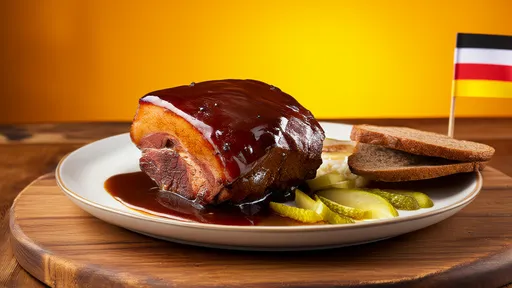
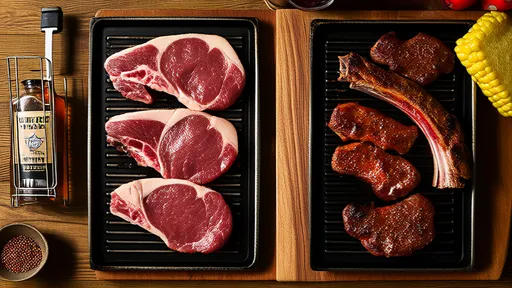
German cuisine, with its emphasis on hearty, robust flavors, provides the perfect canvas for this technique. Dishes like Bierwurst or beer-marinated roasts are testaments to the efficacy of beer marination. The choice of beer is crucial; a weissbier with its high yeast content might be chosen for poultry or pork to impart a subtle fruitiness, while a starkbier (strong beer) with its robust malt profile and inherent proteases could be reserved for red meats like beef or game. The marination time varies, often spanning several hours to overnight, allowing sufficient time for the biochemical processes to work their magic. This patience is rewarded with meat that cooks evenly, retains moisture, and delivers a complexity of flavor that is both ancient and innovative.
Beyond tradition, modern culinary science has begun to quantify and appreciate the nuances of beer marination. Studies have shown that the proteolytic activity in beer can reduce cooking times and improve juiciness, while the yeast contributes to Maillard reaction products during cooking, enhancing browning and developing richer flavors. This intersection of empirical knowledge and scientific validation underscores why this method has endured for centuries. It is not merely a folk practice but a refined technique that leverages natural biochemistry to achieve culinary excellence.
In conclusion, the German practice of marinating meat in beer is a profound example of culinary alchemy where science and tradition converge. The dual嫩化效果—tenderizing effects—driven by yeast and proteases transform ordinary ingredients into extraordinary dishes. This process, honed over generations, highlights a deep understanding of food chemistry long before modern science could explain it. For any cook seeking to elevate their craft, embracing this method offers a path to achieving textures and flavors that are both deeply satisfying and intellectually intriguing, a true testament to the ingenuity embedded in Germany's culinary heritage.
By /Aug 20, 2025

By /Aug 20, 2025

By /Aug 20, 2025

By /Aug 20, 2025

By /Aug 20, 2025
By /Aug 20, 2025
By /Aug 20, 2025

By /Aug 20, 2025

By /Aug 20, 2025
By /Aug 20, 2025

By /Aug 20, 2025

By /Aug 20, 2025
By /Aug 20, 2025

By /Aug 20, 2025
By /Aug 20, 2025
By /Aug 20, 2025
By /Aug 20, 2025
By /Aug 20, 2025
By /Aug 20, 2025

By /Aug 20, 2025
