In the misty forests and along the rugged coastlines of Scandinavia, a quiet revolution is taking root. Foraging, once a necessity for survival in these northern lands, has reemerged as a profound cultural and culinary movement. It is more than a trend; it is a return to an intimate dialogue with the landscape, a way of reconnecting with the ancestral knowledge that lies dormant in the soil and the collective memory. This is not about mere subsistence but about rediscovering a palate shaped by the wild, a philosophy where food is not bought but found, where a meal begins not in a kitchen but with a walk in the woods.
The Nordic foraging ethos is deeply intertwined with the concept of allemansrätten, or the right of public access. This ancient principle grants everyone the freedom to roam the countryside and to harvest the gifts of nature, provided it is done with respect and care. It is a legal and cultural framework that encourages a relationship with the land based on stewardship rather than ownership. This freedom is the bedrock upon which the modern foraging movement is built, allowing urban dwellers and chefs alike to venture out and engage with their environment in a deeply personal way. It transforms a simple walk into a potential feast, turning every glance at the ground or at a bush into a question of edibility and taste.
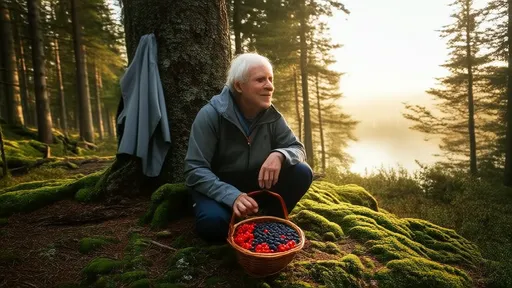
For the uninitiated, the Scandinavian forest can appear as a monochrome sea of green and brown. To the trained eye, however, it is a vibrant, seasonal pantry. The pursuit begins with the most accessible and rewarding of its offerings: wild berries. From late summer through autumn, the forest floor and clearings erupt in a riot of color. The iconic bilberry, a northern cousin of the blueberry, stains fingers purple and offers a deep, tangy sweetness that is the essence of the Nordic summer. Slightly taller bushes yield the ruby-red lingonberry, a tart, bracing fruit that is a staple in jams, sauces, and desserts, providing a vital source of vitamins for the long winter ahead.
Venturing deeper, one might find the elusive cloudberry, a golden amber jewel that thrives in northern bogs and marshes. This rare berry, with its unique sweet and tart flavor, is highly prized and often called the gold of the Arctic. Equally important is the rowan berry, which hangs in heavy, bright orange clusters. Bitter and astringent when raw, its true potential is unlocked only by the first frost, which mellows its intensity, or by careful cooking into rich, complex jellies that pair perfectly with game. Each berry tells a story of adaptation, a lesson in patience, and a specific set of environmental conditions required for it to flourish.
Beyond the colorful bounty of berries lies a more subtle, often overlooked layer of the foraging world: mosses and lichens. This is where foraging transcends simple gathering and enters the realm of the mystical. The most famous of these is Iceland moss, a lichen that, despite its name, is common across Scandinavia. When dried and processed, it loses its natural bitterness and becomes a valuable thickening agent or a flour substitute, historically a lifesaving source of carbohydrates during famines. Another surprising edible is reindeer moss, a pale, branching lichen that forms soft carpets on the forest floor. While it requires extensive soaking and cooking to become palatable, it represents a direct link to the traditional Sami diet and the reindeer that graze upon it.
The journey from identification to plate is fraught with responsibility. The first and most sacred rule of foraging is absolute certainty. The margin for error is nonexistent; a misidentification can range from causing severe gastric distress to being fatal. This is not a hobby for the careless. It demands investment in a good, regional field guide, and even better, mentorship from an experienced forager. Knowledge is the most essential tool, far more important than any basket or knife. Furthermore, sustainable harvesting is a non-negotiable tenet. This means taking only what you need, never stripping a plant completely, and avoiding rare or protected species altogether. The forager’s role is that of a careful curator, not a clear-cutting consumer, ensuring that the same patch will yield its treasures for generations to come.
The allure of these wild ingredients has not been lost on the culinary world. Nordic chefs, propelled by the New Nordic Cuisine manifesto and its emphasis on purity, seasonality, and terroir, have become the modern champions of foraging. They venture into the forests alongside their suppliers, seeking inspiration and the unparalleled flavor profiles that only wild ingredients can provide. A simple moss, when cleaned and dried, can be used to create a crust for a piece of fish, imparting an earthy, smoky flavor of the forest itself. A handful of freshly picked lingonberries can be transformed into a sharp, vibrant gel that cuts through the richness of duck liver. In these kitchens, foraging is elevated to an art form, a way to paint a plate with the authentic taste of a specific place and time.
Ultimately, the Nordic foraging movement is a holistic practice. It is a form of slow food in its purest sense, engaging the body in the hunt, the mind in the identification, and the soul in the connection to nature. It offers a counter-narrative to the pace of modern life, demanding mindfulness, patience, and presence. It is a physical activity that provides nourishment, a mental exercise in botany and ecology, and a spiritual practice in gratitude. To kneel on the damp earth, to carefully pluck a berry from its stem, or to gently collect a patch of moss is to participate in an ancient cycle. It is to taste the landscape itself and to remember that we are, and always have been, a part of the natural world.
By /Aug 20, 2025
By /Aug 20, 2025
By /Aug 20, 2025
By /Aug 20, 2025
By /Aug 20, 2025

By /Aug 20, 2025
By /Aug 20, 2025
By /Aug 20, 2025
By /Aug 20, 2025
By /Aug 20, 2025
By /Aug 20, 2025
By /Aug 20, 2025
By /Aug 20, 2025

By /Aug 20, 2025
By /Aug 20, 2025

By /Aug 20, 2025
By /Aug 20, 2025
By /Aug 20, 2025

By /Aug 20, 2025

By /Aug 20, 2025
