In the high-stakes world of competitive sports, the conversation around athletic preparation has shifted dramatically. No longer is raw talent or relentless practice alone sufficient to secure victory at the highest levels of football, basketball, or other intermittent sports. The true differentiator, the hidden engine of performance, is now understood to be a meticulously crafted and highly specialized foundation of physical conditioning. This isn't just about being fit; it's about building a specific type of fitness that mirrors the brutal, unpredictable, and explosive demands of the game itself.
The very nature of sports like football and basketball defies simple categorization. They are not pure endurance contests like a marathon, nor are they solely tests of raw power like Olympic weightlifting. Instead, they exist in a complex middle ground—a chaotic symphony of explosive sprints, rapid changes of direction, powerful jumps, and tactical periods of active recovery or even complete rest. This stop-start, high-intensity pattern is what defines them as intermittent activities. The physical preparation for an athlete in these sports, therefore, cannot be a generic one-size-fits-all regimen. It must be a bespoke armor, forged to protect against the specific stresses of the game and to unleash performance exactly when it is needed most.
The physiological profile of an intermittent sport athlete is uniquely demanding. It requires a powerhouse engine capable of producing immense power in short, violent bursts, and a recovery system so efficient it can do it again, and again, and again, with minimal drop-off. This places enormous strain on two primary energy systems: the ATP-PCr system for immediate, explosive movements lasting less than ten seconds, and the anaerobic glycolytic system for sustaining high-intensity efforts that may last up to several minutes. The aerobic system, often misunderstood as less critical in these power sports, plays a vital role as the unsung hero of recovery. It is this system that clears metabolic byproducts like lactate from the muscles and replenishes energy stores during those brief moments of rest within a half or between plays, directly influencing an athlete's ability to maintain a high level of performance throughout the entire contest.
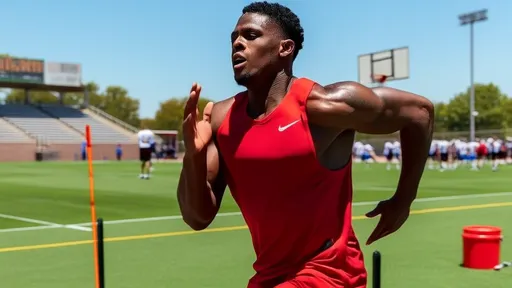
Building this specialized engine requires a multifaceted approach to conditioning, far beyond just running laps. High-Intensity Interval Training (HIIT) sits at the very core of this preparation. HIIT sessions are designed to brutally simulate the conditions of a game, repeatedly pushing the athlete into and then out of their red zone. A basketball player might execute a drill involving a full-court sprint, a defensive slide sequence, a jump to contest a shot, and then a brief walk back to the starting line—only to immediately repeat the cycle. A football wide receiver might run a series of go-routes at maximum speed, with a 45-second rest mirroring the downtime between plays. This conditions the body to tolerate lactate accumulation, accelerate phosphocreatine replenishment, and enhance cardiovascular efficiency specifically for the work-to-rest ratios they will face in competition.
However, the ability to express this hard-earned conditioning is utterly dependent on strength and power development. The force behind a dunk, the acceleration to beat a defender off the dribble, the power to win a header, or the stability to hold off a tackle all originate in the weight room. Compound movements like squats, deadlifts, and cleans are not just for building muscle mass; they are fundamental for increasing an athlete's force production capacity. A stronger athlete can produce the same level of power with less relative effort, which translates directly to improved efficiency and reduced fatigue late in games. This strength base is the platform upon which power—the combination of strength and speed—is built through exercises like plyometrics and Olympic lifts, enabling those game-changing moments of explosive brilliance.
Perhaps the most overlooked yet critical component of the entire体能储备 puzzle is robustness and resilience. The best conditioning program in the world is worthless if an athlete is sidelined with a hamstring strain or an ankle sprain. Modern体能储备 programs are deeply integrated with injury mitigation strategies. This involves targeted strengthening of often vulnerable areas like the hamstrings, groin, and rotator cuff muscles. It emphasizes unilateral training to correct muscle imbalances and improve stability. Furthermore, a significant focus is placed on eccentric strength—the ability to control deceleration. Since non-contact injuries frequently occur during the braking phase of a sprint or upon landing from a jump, training the body to absorb these forces effectively is a primary line of defense against the training room.
The final piece of the puzzle is perhaps the most human: the element of fatigue resistance and mental fortitude. The fourth quarter, the final minutes of a tight match—this is where games are truly won and lost, often by the team that is both physically and mentally sharper. Specific conditioning drills are designed not just to fatigue the body, but to do so in a game-realistic context that also challenges decision-making, technical skill, and tactical awareness under duress. Drills like conditioned small-sided games (SSGs) in soccer or full-court press-breaker drills in basketball force athletes to execute precise passes, make smart reads, and maintain defensive positioning while their lungs are burning and their legs are heavy. This conditions the mind to overcome physical distress and to trust in technique when fatigue tells them to compromise form, forging a mental toughness that is every bit as important as physical readiness.
In conclusion, the modern approach to体能储备 for intermittent sports is a sophisticated and holistic science. It has evolved from simple fitness tests to a comprehensive strategy that intertwines metabolic conditioning, maximal strength development, explosive power training, and meticulous injury prevention. It’s a demanding and continuous process that demands as much intellectual engagement from the coaching and performance staff as it does physical effort from the athlete. The ultimate goal is clear: to construct the most resilient, powerful, and durable athlete possible—one who is not merely prepared to play, but engineered to excel and dominate from the opening whistle to the final buzzer, capable of producing moments of magic when it matters most.

By /Aug 25, 2025

By /Aug 25, 2025

By /Aug 25, 2025

By /Aug 25, 2025

By /Aug 25, 2025

By /Aug 25, 2025

By /Aug 25, 2025

By /Aug 25, 2025
By /Aug 25, 2025

By /Aug 25, 2025

By /Aug 25, 2025

By /Aug 25, 2025

By /Aug 25, 2025

By /Aug 25, 2025

By /Aug 25, 2025

By /Aug 25, 2025

By /Aug 25, 2025

By /Aug 25, 2025

By /Aug 25, 2025

By /Aug 25, 2025
